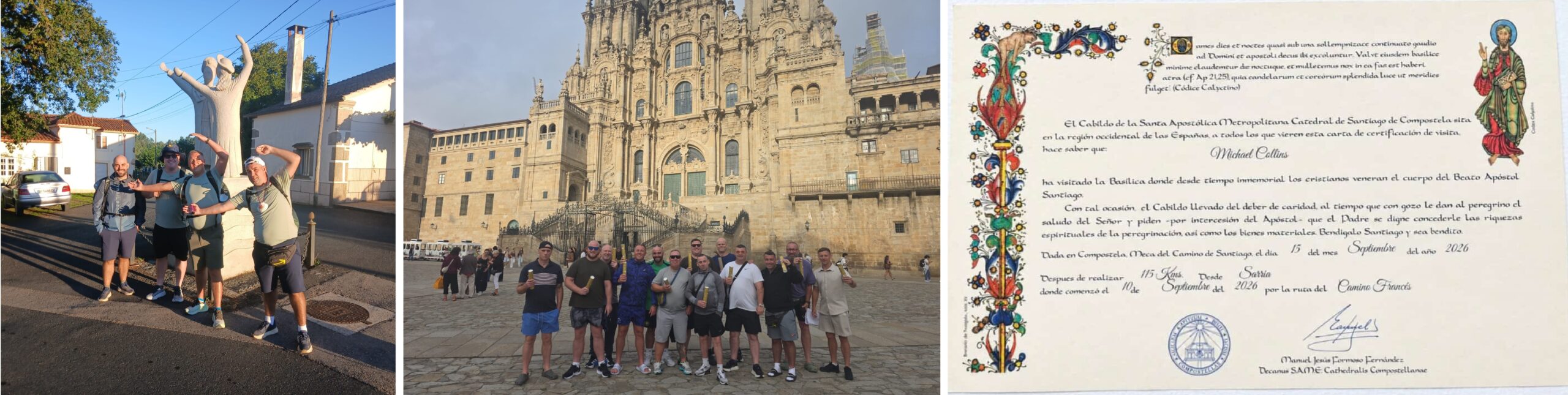
Memories were made and stories shared on the long road to Santiago de Compostela.
For the first time, a group of Traveller men walked the Camino together on a journey of recovery — turning 115 kilometres of ancient road into a powerful journey of solidarity, remembrance and hope.
On Monday (14 Sept) the Pavee Glokes hiking group completed their 115km pilgrimage on the Camino between Sarria and Santiago de Compostela in northwestern Spain.
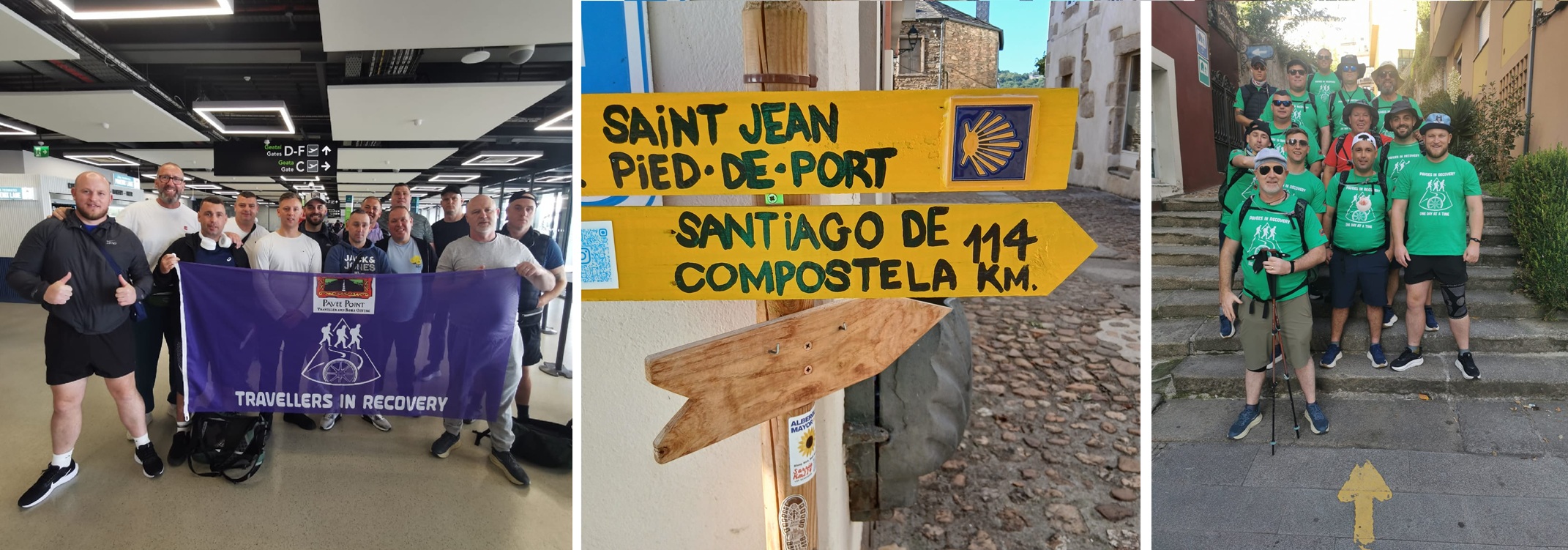
Organised and accompanied by Pavee Point Men’s Health Programme, and starting on World Suicide Prevention Day, the group of eleven Traveller men spent five days on the Camino in order to raise awareness around Traveller mental health, recovery and the importance of having collective spaces for open conversations and identifying collective solutions.
Speaking on World Suicide Prevention Day, John Collins (Men’s Health Programme) underlined the political and social importance of the journey to the Camino: ‘As Traveller men, the mental health crisis for our community remains as severe today as it was in 2010 when the All Ireland Traveller Health Study was undertaken. We work on the ground using a community work approach, and it is targeted work like the Hike and Talk — like the Camino pilgrimage — where we can walk and talk shoulder to shoulder as Traveller men, raise awareness and show others that recovery is possible.’
‘This health crisis isn’t a mystery,’ said Michael Collin (Men’s Health Programme), ‘it affects fathers, brothers, uncles — families across the country. It is caused by racism, discrimination, barriers to education, lack of employment, homelessness and severe overcrowding. All of this impacts on our mental health.’
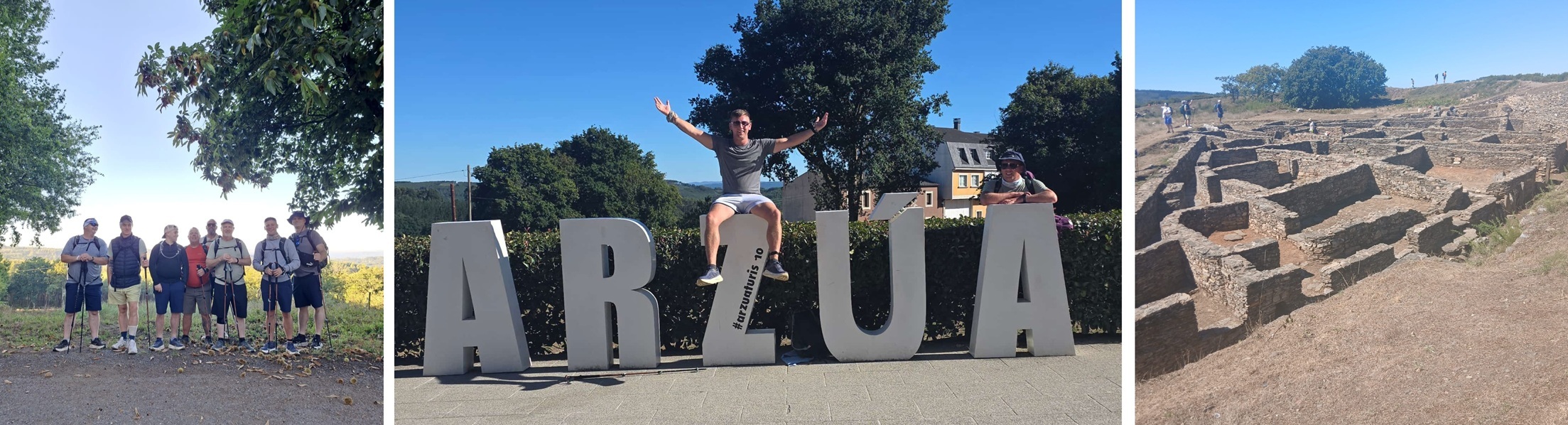
The route to Santiago de Compostela
Day 1 took the group over 23km from Sarria to Portomarin past the Romanesque Church of Santiago de Barbadelo, the oak groves, and through the rolling hills of Galicia. Day 2 was another 23km between Portomarin and Palas, with the second half to the day given over to the tough Galician rompepiernas (leg-breakers) and past the Celtic Iron Age hillfort of Castromaior.
The longest day and most demanding leg of the pilgrimage came on day 3 between Palas and Arzua. 29km of constant rolling hills and finally over the Ribadiso da Baixo – a 12th-century late Gothic bridge – into Arzua. A gentler day followed, full of fellow pilgrims and scenic rural countryside, on the road between Arzúa and Arca/O Pedrouzo.
The final day to Santiago de Compostela took the group over the Monte do Gozo (Mount of Joy) and towards the Old Town of Santiago and to the Santiago de Compostela Cathedral on the Plaza del Obradoiro.
The shared culture of the Camino resonates with Travellers and Traveller families who over the years would attend pilgrimages together around Ireland and the UK. This pilgrimage carries this tradition forward through the generations, serving as a symbol of significant importance and inspiring hope and pride.
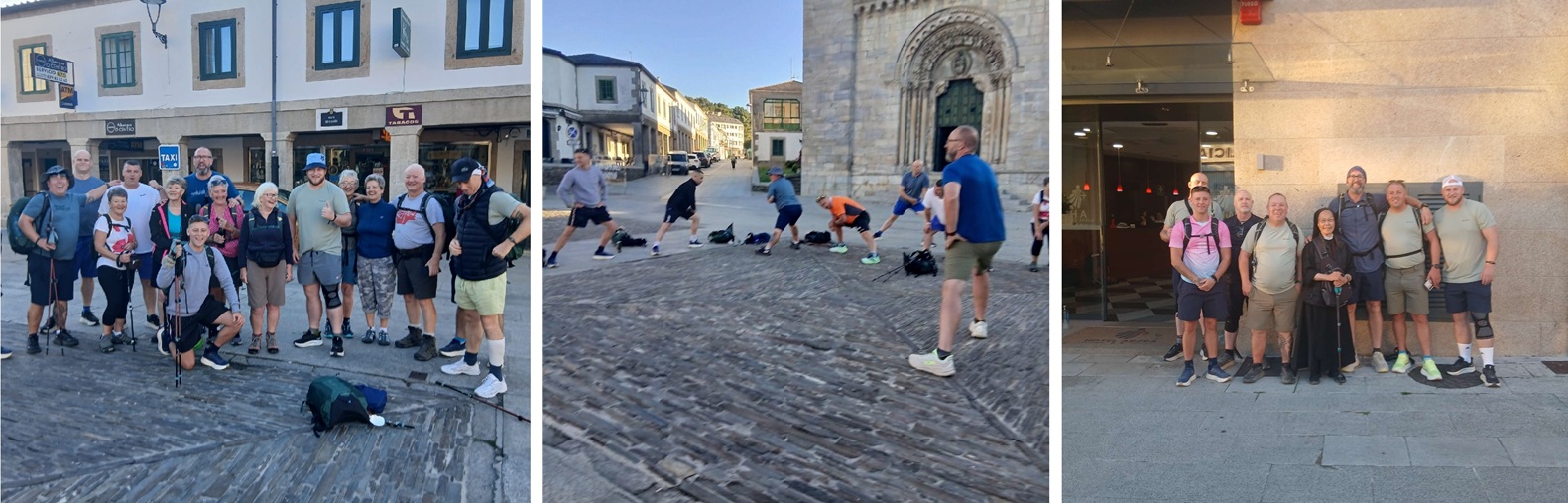
Congratulations to all who completed the pilgrimage, a historic moment for Traveller men: to Tommy McGinley, Eddie Power, Joseph David McDonagh, William Lawerence, John Martin Connors, Thomas Mongan, William John White, David Paul Lawrence, Dean Duggan, and Martin Anthony Collins.
Hats off to Michael Collins and John Collins, on Pavee Point’s Men’s Health Programme, for organising this project and the months of months of training in preparation.
Special thanks also goes to those who funded and helped prepare the group for the pilgrimage: Pavee Point, the HSE, the Great Outdoors, a philanthropic organisation, Rosaleen McDonagh, and John Boland & Get Up Adventures.