

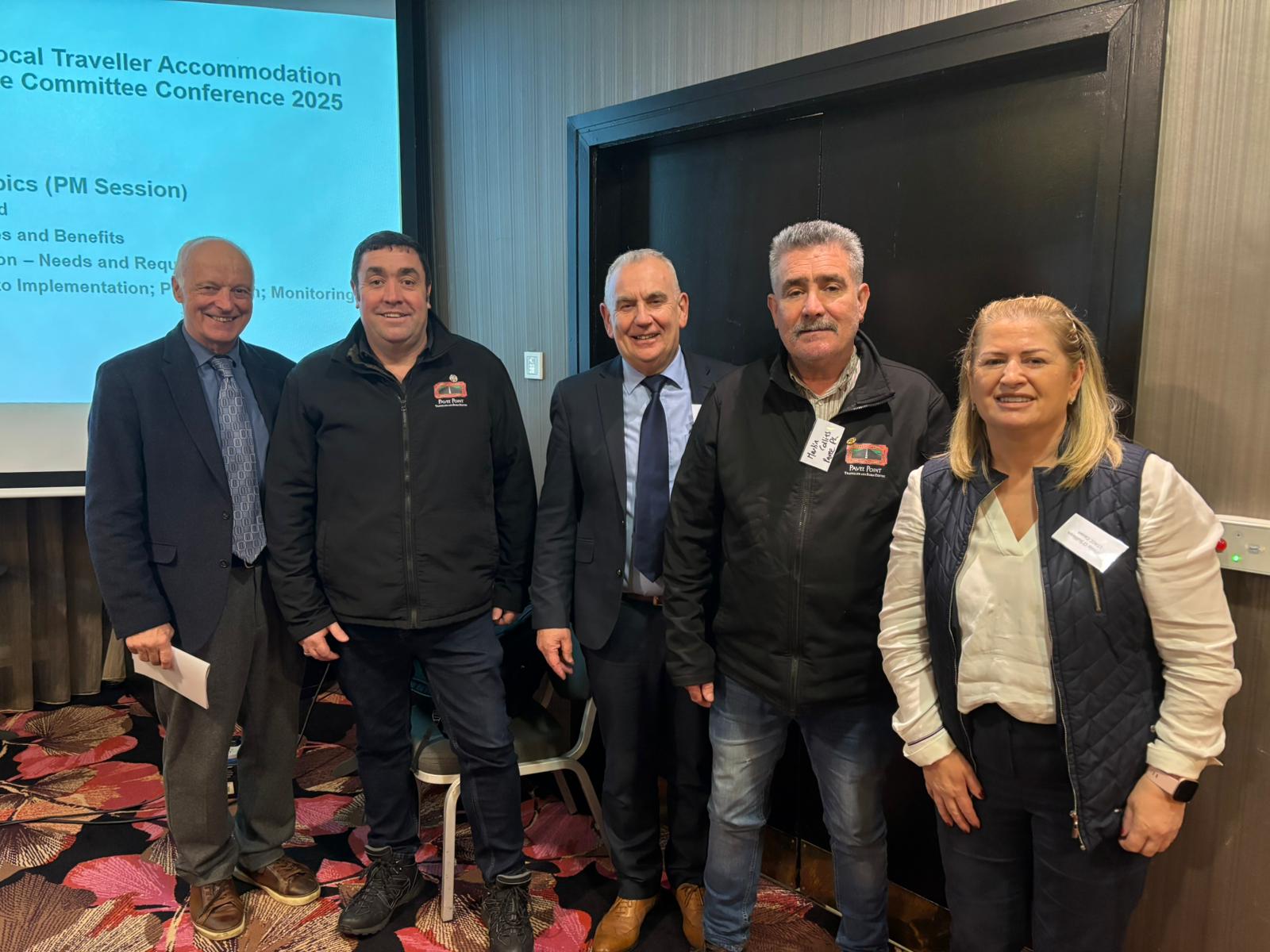
Yesterday, Pavee Point attended the National Traveller Accommodation Consultative Committee (NTACC) Conference. Key topics discussed included structural reform within accommodation agencies and local authorities to remove discriminatory practices and the development of a more effective collaborative approach between the State and Traveller organisations.
This was a timely discussion, with the launch of the Government’s new National Housing Plan – Delivering Homes, Building Communities 2025-2030.
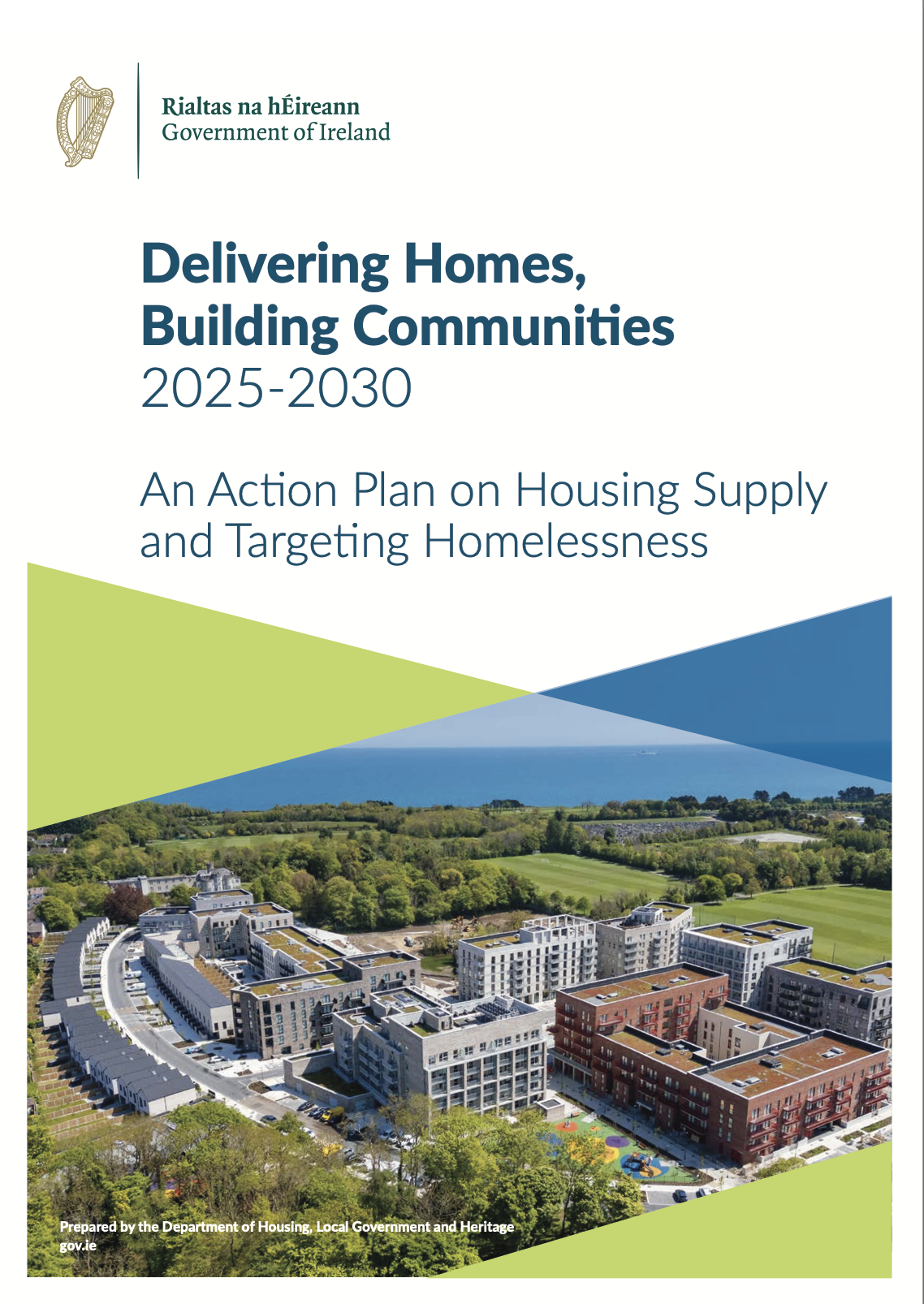
Pavee Point welcomes the focus on ending homelessness in the new plan with clear action and resourcing in this area. We also welcome that Travellers are named as a target group with specific accommodation needs.
However, we regret that Travellers are not explicitly named in the new homeless actions, considering Travellers are disproportionately represented in homeless figures. Travellers, in fact, are named in only one targeted action – to continue investment in Traveller Specific accommodation.
Martin Collins, Co-Director said:
“An increase in the Traveller accommodation budget is welcome, but we know that although there has been full spend of Local Authority budgets in the last 5 years, it hasn’t addressed the root causes of low supply, and we have seen very few new units for Traveller families on the ground”.
Pavee Point is extremely disappointed that Roma are not included as a target group and receive no mention within the plan, considering the commitments that the State has made to Roma inclusion in the National Traveller and Roma Inclusion Strategy, with specific actions on addressing Roma homelessness. We are also concerned about the language used in the document concerning homeless families from other minority ethnic or migrant backgrounds.
Lynsey Kavanagh, Co-Director said:
“The Housing Plan does not name migrant, Roma or other minority ethnic families as a target group or assign any actions or resources to support these families. Rather they are referred to as a problem. This approach seems in line with the State’s proposed changes to housing legislation which looks to further restrict migrant families, including Roma, from any housing or emergency homeless supports. This is a very worrying, regressive and exclusionary approach”.
The plan states that local authorities will extend housing support to those victims of domestic violence who have been “assessed as eligible for social housing support” which seems to disregard the needs of migrant women, including Roma women, who experience domestic violence, and who cannot meet the Habitual Residence Condition or other residency requirements. This means that these women are effectively excluded from accessing housing support and are forced to return to violent situations.
While the plan promises to publish quarterly data on families and children exiting homelessness, it makes no mention of collecting ethnic data across housing and homeless datasets. This is essential for identifying and addressing inequalities and is another major gap and has been raised consistently by International Human Rights monitoring bodies. This failure to collect ethnic data, or include clear targeted actions to address the housing and accommodation needs of Travellers, Roma and other minority ethnic groups, risks reinforcing existing inequalities and housing discrimination.
We call on the State to:
• Provide specific details on the plan for provision of Traveller Specific Accommodation to meet the projected needs of Travellers, with clear budgets, targets and timelines.
• Implement a universal ethnic identifier across all housing and homeless data sets to ensure that those who are most impacted by homelessness are receiving targeted support.
• Consider the State’s legal obligations under the Public Sector Duty and ensure that the needs of all families experiencing housing precarity and homelessness in Ireland are being supported by the new Housing Plan.
• Set aside the Habitual Residence Condition (HRC) and other immigration status barriers to migrant and Roma women experiencing DSGBV, to ensure access to refuge, and housing options.