Skip to content
Home » News » Launch of Landmark National Traveller Research on Cancer
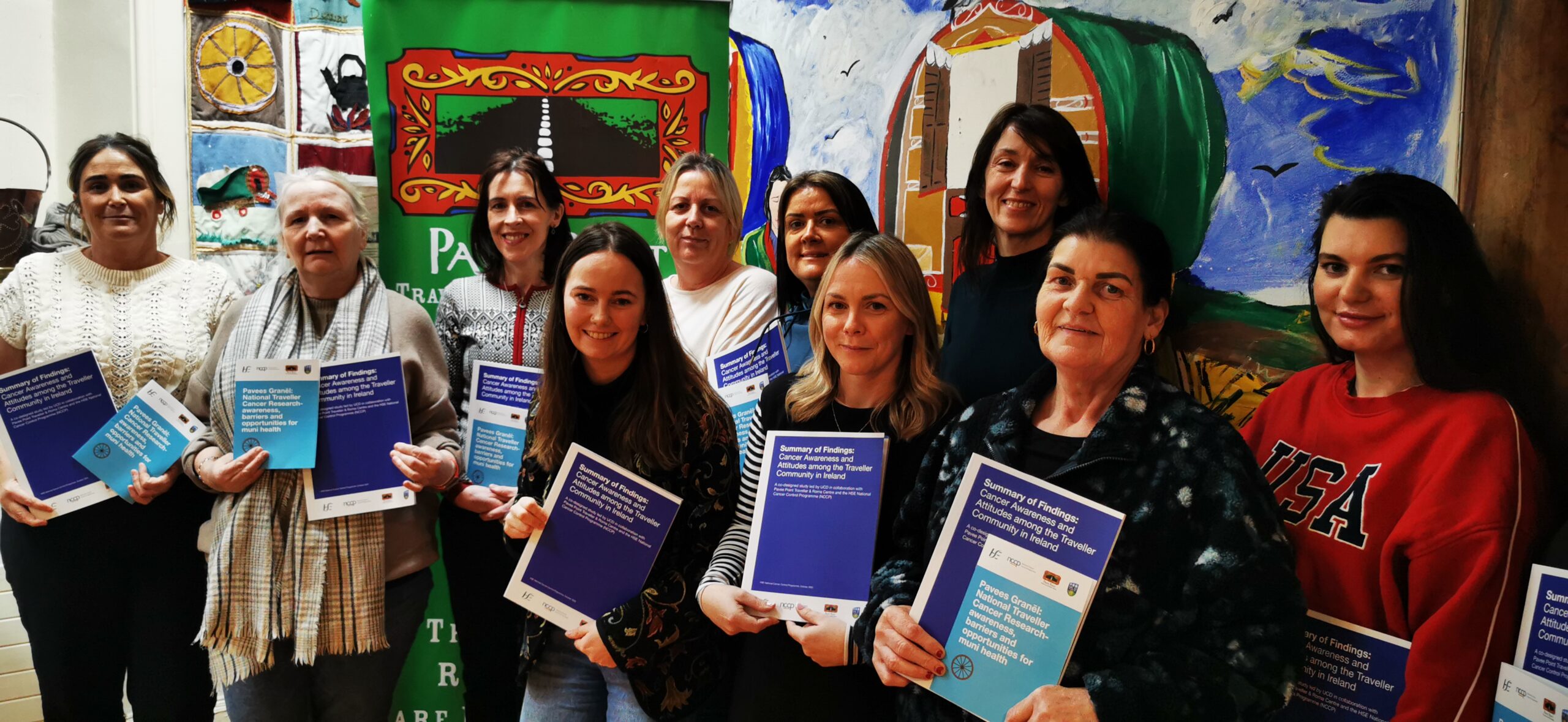
Launch of landmark National Traveller Research on Cancer
Study highlights barriers to cancer awareness and prevention as well as vital role Traveller Primary Health Care Projects play in addressing this
A national co-designed study led by UCD in partnership with Pavee Point Traveller & Roma Centre and the HSE National Cancer Control Programme (NCCP), and supported by local Traveller organisations/Traveller Primary Health Care Projects around the country, was launched today during a meeting of the National Traveller Health Network. The report, Cancer Awareness and Attitudes among the Traveller Community in Ireland, presents the first national study on cancer awareness, attitudes and access to health services amongst Travellers in Ireland.
The research draws on a survey conducted with 483 Travellers, as well as in-depth interviews with Travellers and healthcare professionals. Traveller Community Health Workers played a central role in research design, data collection, supporting recruitment and supporting analysis.
Key findings
The study highlights that 36% of Travellers said that they had been diagnosed with cancer and 42% said a family member had cancer. Also significant barriers to cancer prevention, early diagnosis and access to mainstream health services, including:
-
Racism and discrimination, both within health settings and in wider society create barriers for Travellers accessing services. This was acknowledged by both Travellers and health service providers.
-
The impact of social determinants of health (poor accommodation, poverty, racism, discrimination, education, etc) present key challenges for Travellers in relation to cancer risk and engagement with health services.
-
Some Travellers reported not being able to attend vital screening services due to feelings of embarrassment (21%); fear of results (19%) or because of difficulties accessing post (18%)
-
Barriers to acting on a potential sign or symptom of cancer include not wishing to discuss symptoms with a doctor’s receptionist (37%) fearing the potential diagnosis (32%) and the possibility of needing additional tests (31%).

“Cancer is one of the main causes of death for our community and we are dying at a faster rate compared to the general population. The research reinforces what Traveller Health Workers know, the fact that racism, discrimination, poor living conditions, low literacy levels and other social determinants of health, combined with lack of culturally appropriate health services are costing Traveller lives.” said Mary Brigid Collins, Coordinator of the Primary Health Care Programme at Pavee Point.
At the same time, the research identifies important strengths and enablers:
-
Higher rates of uptake on cancer screening amongst Travellers who received an invitation for screening:
-
84% of Travellers reported attending breast screening; compared with 70% in the general population
-
88% of Travellers reported reported cervical cancer screening; compared to 75% in the general population
-
60% of Travellers participated in bowel screening; compared to 46% in the general population
Traveller Primary Health Care Projects are key drivers supporting Traveller access to trusted health information and cancer screening uptake; with 28% of Travellers accessing screening services after talking to a local Traveller Primary Health Care Worker. Health literacy is also positive, with many Travellers recognising the signs and symptoms of cancer and understand ways to reduce risk—particularly when information is presented in clear, accessible formats.
“This important national research yet again endorses the vital role of Traveller Primary Health Care Projects on the ground. They are a trusted source of information for Traveller families, and as a result, Travellers are accessing mainstream screening services at a higher rate than the general population. It also shows that Traveller health literacy is improving; with the majority of respondents understanding risks, signs and symptoms. However, access and health literacy alone does not automatically translate to better outcomes for Travellers and we have to ask ‘why is this the case?’ The report clearly shows that institutional barriers – racism and discrimination are at the root cause and this has to be seriously addressed, “ said, Co, Director, Lynsey Kavanagh, Pavee Point.
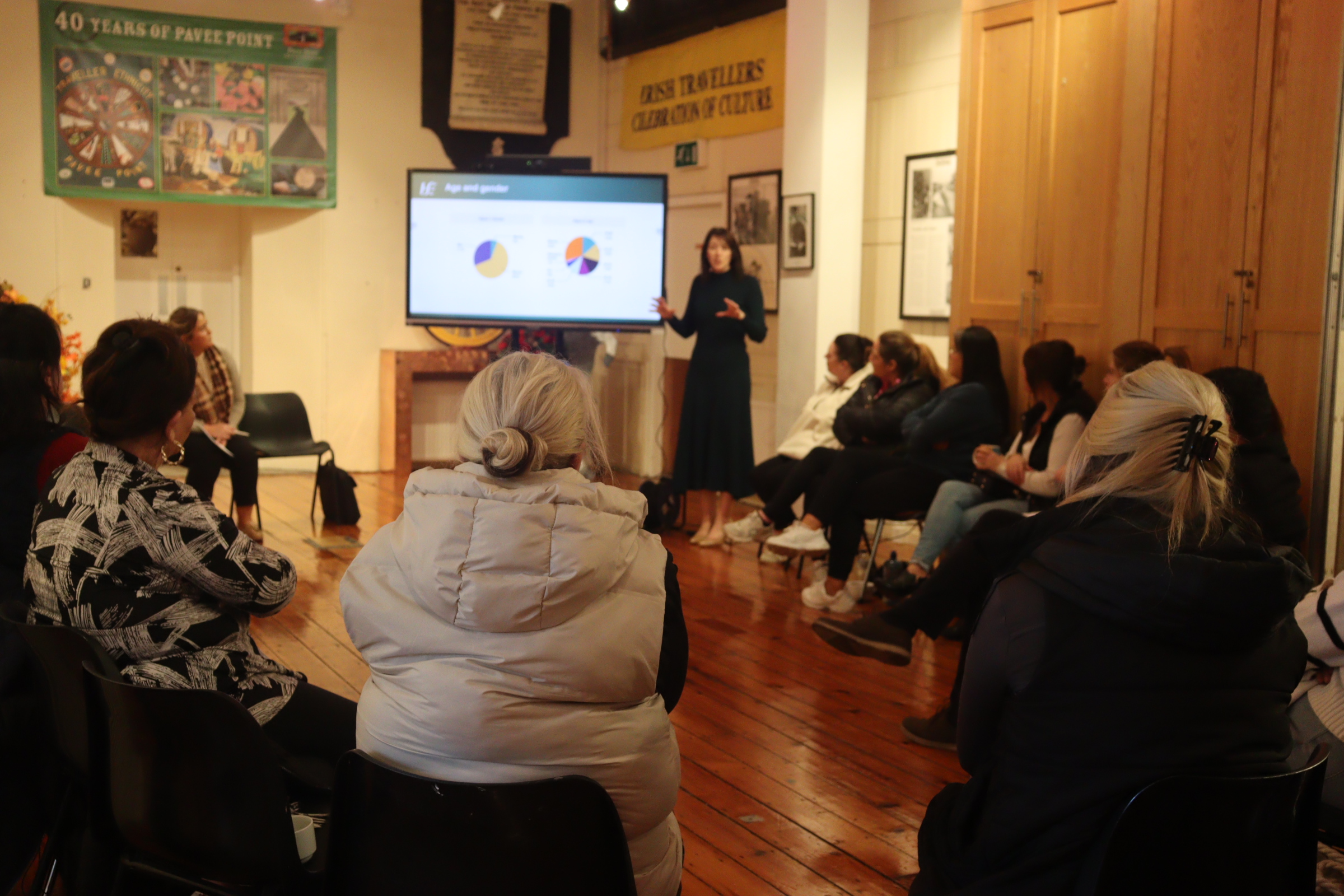
The full research report, and a shorter Traveller-proofed information resource , provide useful insights for policymakers, health services and Traveller organisations/Primary Health Care Projects particularly as the current National Cancer Strategy is due to expire in 2026. It is important that Travellers organisations are actively included and consulted in the development and implementation of the successor Strategy.
The research report: HSE National Cancer Control Programme (2025) Summary of Findings: Cancer Awareness and Attitudes among the Traveller Community in Ireland. A co-designed study led by UCD in collaboration with Pavee Point Traveller & Roma Centre and the HSE National Cancer Control Programme (NCCP) is available here
A Traveller-proofed resource highlights some of the key findings from the research is available here
Main Photo -LtoR – Winnie McDonnell, Pavee Point; Lena Lawrence, Balbriggan Travellers; Dr Patricia Fox, UCD; Triona Bracken, Pavee Point, Bridgie Nevin, Coolock PHC; Pauline McDonnell, Pavee Point; Lynsey Kavanagh, Co Director, Pavee Point; Oonagh Kennedy, National Cancer Control Programme, HSE; Winnie McDonagh, Drogheda; Ellen McDonagh, Balbriggan; Dr Kate Frazer, UCD.