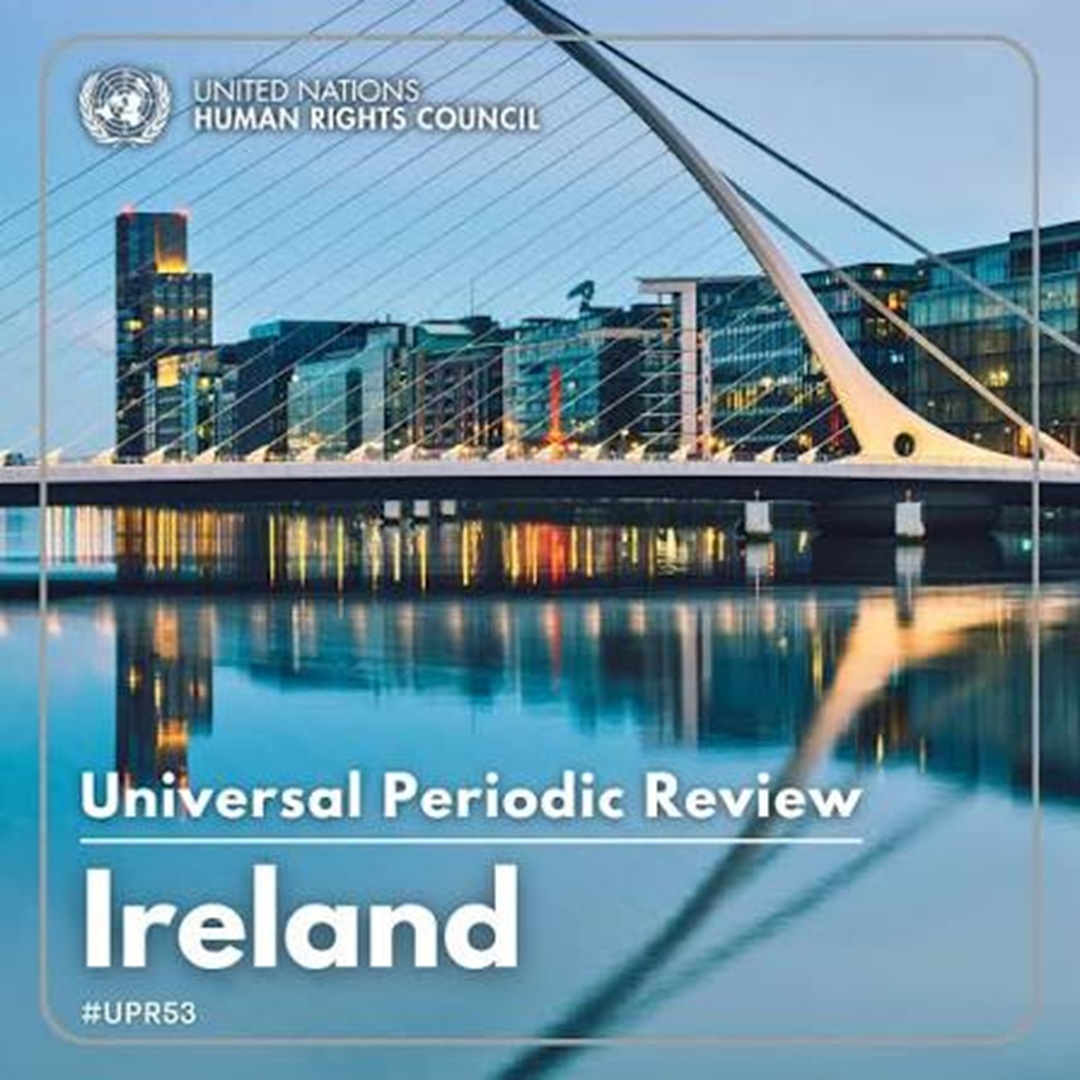
Friday, Nov 12 — Ireland underwent its fourth Universal Periodic Review (UPR) before the UN Human Rights Council Working Group in Geneva on the 10th November 2026. The review provided an opportunity for UN Member States to assess Ireland’s progress on its human rights commitments and identify areas requiring further action.
The review saw extensive references to Travellers and Roma, with at least 25 Member States explicitly referring to their rights and inclusion. While States acknowledged developments in Ireland’s human rights policies and national strategies, a recurring theme was the need to translate these commitments into effective implementation and improved outcomes.
Overview of the Review
Member States raised a broad range of human rights issues, including racism and discrimination, housing/accommodation, access to healthcare and education. The wider human rights agenda also encompassed the rights of women and children, people with disabilities, migrants, refugees and people seeking international protection, alongside concerns relating to gender-based violence and social inclusion.
The review reflected both recognition of Ireland’s policy developments and continuing concerns about inequalities and barriers to accessing rights and services. A central issue emerging from the proceedings was the need to ensure that existing legislative and policy commitments are effectively implemented, adequately resourced and translated into measurable outcomes for all, including Roma and Travellers.
Traveller and Roma Rights
Traveller and Roma rights featured prominently throughout the review, with at least 25 countries making specific recommendations, acknowledgements or observations.
The issues raised were wide-ranging, including racism and discrimination, accommodation, education, employment, healthcare, access to public services and the implementation of the National Traveller and Roma Inclusion Strategy II (NTRIS II).
A number of States specifically called for stronger implementation of NTRIS II and the National Action Plan Against Racism. Others highlighted the importance of appropriate accommodation, educational inclusion, improved access to healthcare and employment, and stronger legal protections against discrimination and hate speech.
Particular attention was also given to Traveller and Roma women and girls, including the need to address intersecting forms of discrimination and ensure equitable access to services.
Ireland’s Response
Ireland was represented by a large delegation drawn from relevant Government departments, led by Minister of State Emer Higgins. Minister Higgins outlined the Government’s human rights commitments, highlighting developments in national legislation, strategies and initiatives, including NTRIS II and the National Action Plan Against Racism.
The Department of Children, Disability and Equality (DCDE) was represented by Carol Baxter, Assistant Secretary General, who provided further detail on Traveller and Roma initiatives, including Traveller and Roma community link workers, employment supports and anti-racism training. The Government also emphasised its whole-of-government approach to equality and inclusion.
The Irish presentation highlighted the range of policy frameworks and initiatives now in place. However, many of the issues raised by Member States concerned the continued inequalities experienced by Travellers, Roma and other minority ethnic groups.
The full Working Group report scheduled for 20 November 2026.
You can watch the session here: https://webtv.un.org/en/asset/k1w/k1wnezpxuf
Read the recommendations, acknowledgements and observations concerning Travellers and Roma made by Member States during Ireland’s review: Recommendations, Observations and Acknowledgements – UPR – Nov 2026