The Children’s Rights Alliance Child Poverty Monitor 2026 highlights that child poverty remains a significant issue in Ireland, despite some progress in recent years. The report found that 95,170 children (7.8%) were living in consistent poverty in 2025, meaning they lived in households with low incomes and were unable to afford basic necessities. This is equivalent to one in every 12 children. While the rate has fallen slightly from 8.5% in 2024, children continue to experience higher levels of poverty than any other age group.
The report welcomes measures such as increased income supports, free school books, expanded school meals, Equal Start and DEIS Plus, but notes that many children continue to face barriers related to income, housing, education and access to services.
For Traveller and Roma children, the report highlights the ongoing impact of poverty and inequality across several areas of life.
In early years education, Traveller and Roma children continue to participate at lower rates than the general population. Participation rates stand at 76% for Traveller children and 70% for Roma children, compared to 96% nationally. The report notes that Traveller and Roma children have been identified as priority groups under the Equal Start programme, recognising the need for targeted supports from an early age.
In education, significant gaps remain. Traveller and Roma children are less likely to attend preschool, transfer to post-primary education, remain in school until Leaving Certificate level, or progress to third-level education. The report points to the importance of implementing the Traveller and Roma Education Strategy (TRES) and strengthening supports that help schools engage with Traveller and Roma families.
The report also highlights the housing challenges facing many Traveller and Roma children. Drawing on data from the EU Agency for Fundamental Rights, the report highlights that 63% of Travellers and 92% of Roma live in overcrowded accommodation, while many families experience poor housing conditions, lack of basic facilities and insecure accommodation. Traveller and Roma children are disproportionately affected by homelessness, overcrowding and inadequate living conditions, all of which have a direct impact on their health, wellbeing and educational opportunities.
Overall, the Child Poverty Monitor 2026 shows that while progress is being made in reducing child poverty nationally, Traveller and Roma children continue to experience some of the highest levels of disadvantage in Ireland. The report reinforces the need for targeted action to address inequalities in education, housing, early years services and income supports, ensuring that Traveller and Roma children can fully benefit from efforts to reduce child poverty and improve children’s lives.
Full report here: https://childrensrights.ie/whats-new/latest-publications/child-poverty-monitor/
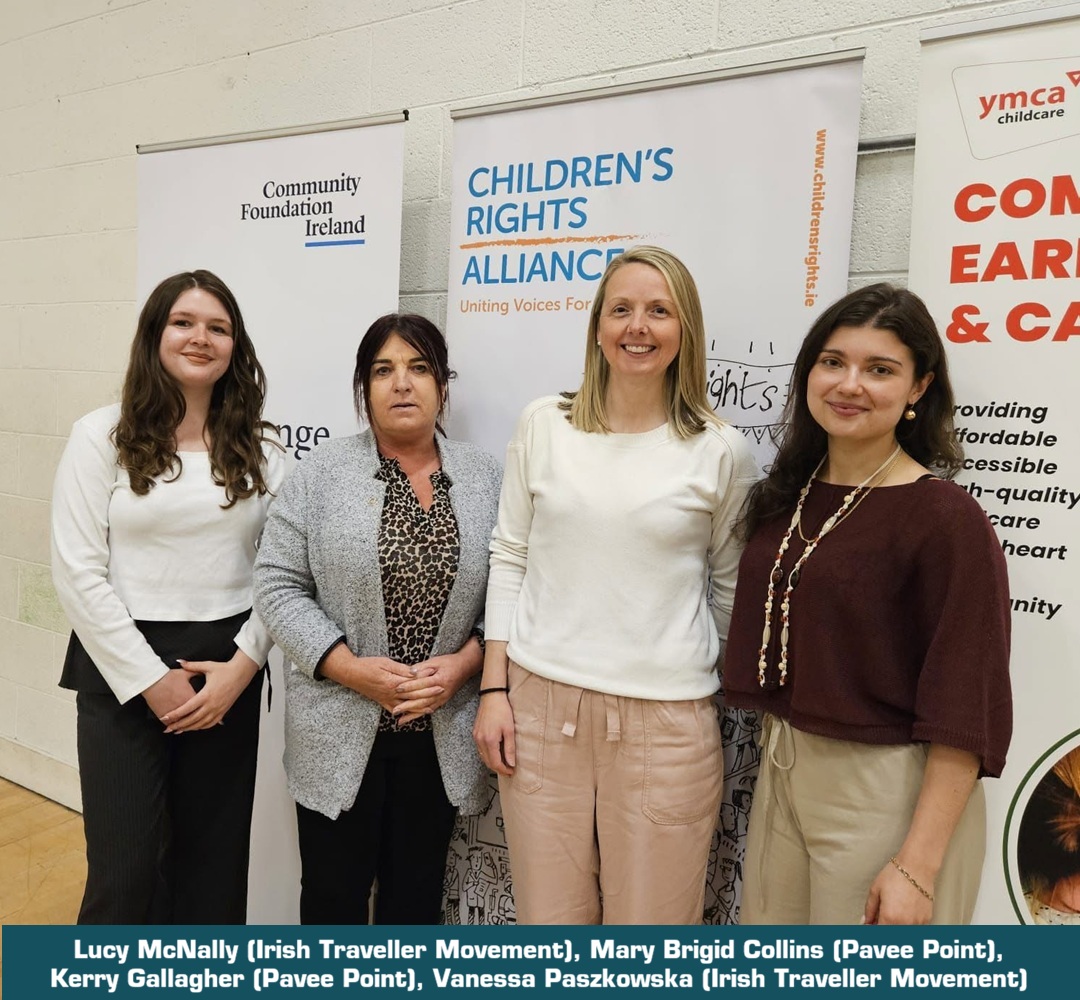
Photo: @Irish Traveller Movement