
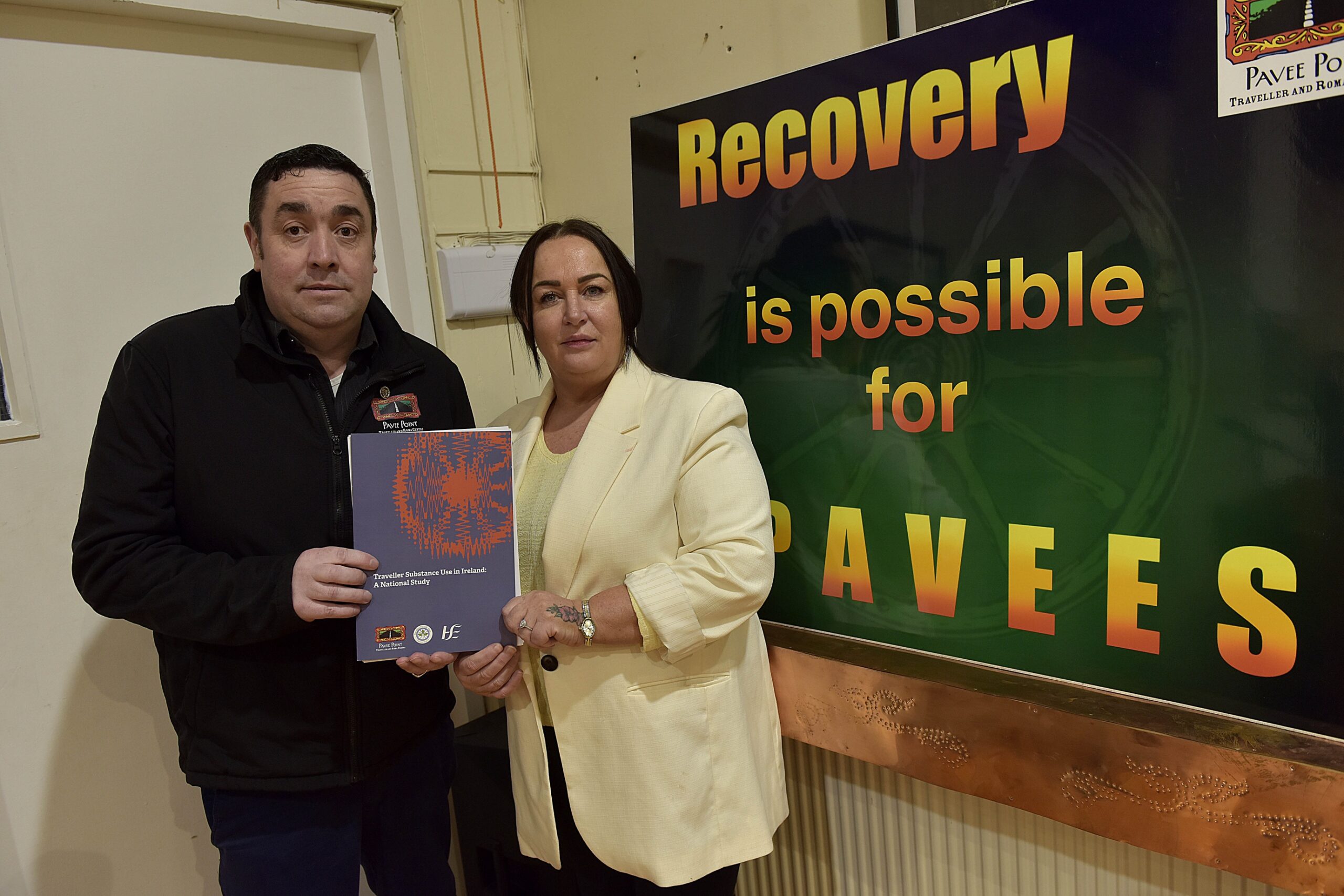
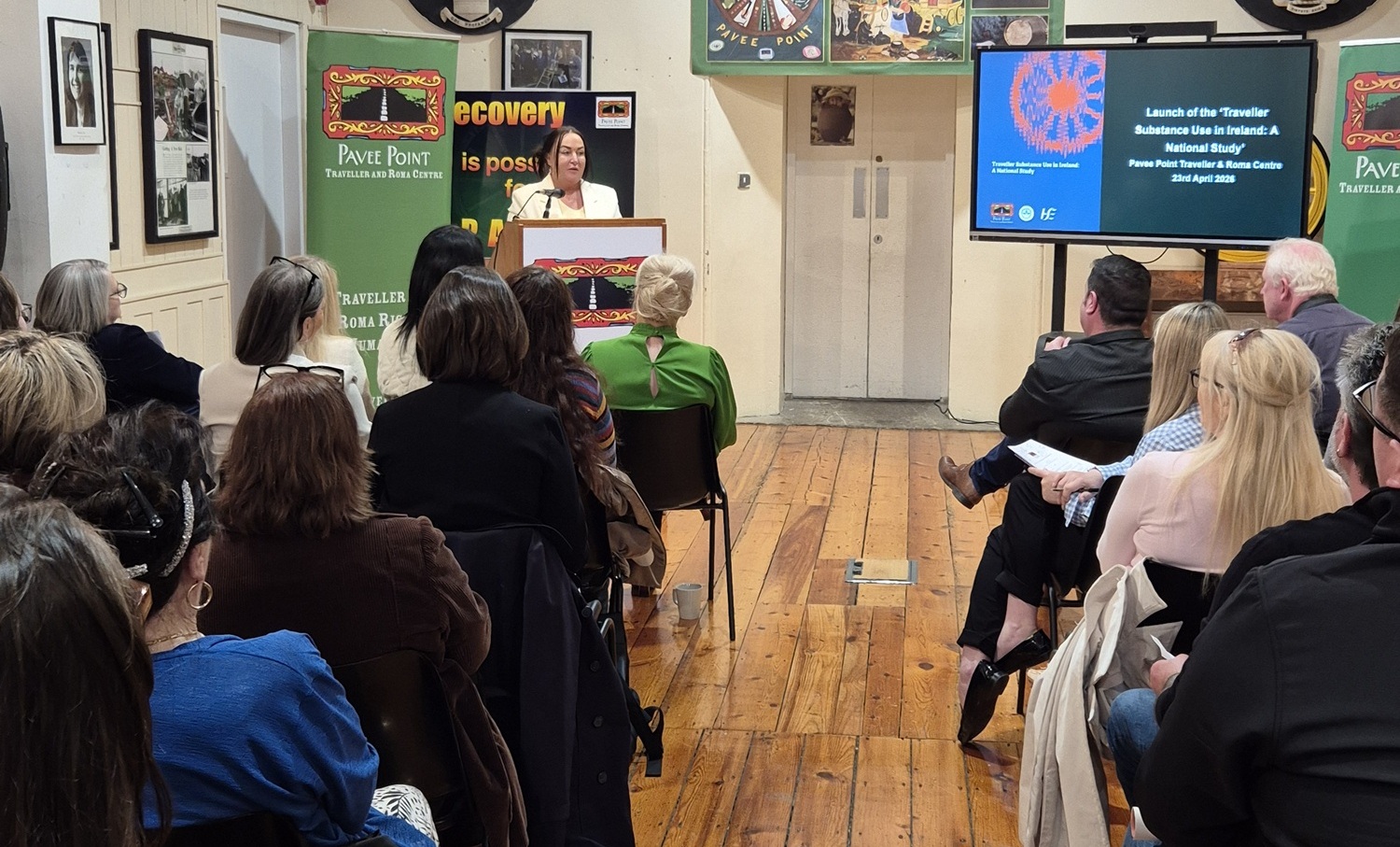
A new national study, launched this morning at Pavee Point, on the impact of substance use on Travellers, highlights disproportionate levels of drug-related harm, barriers to treatment, and poorer outcomes compared to the general population.
“This research makes visible the reality for Travellers and Traveller organisations on the ground,” said John Paul Collins, Community Development Worker at Pavee Point. “This is an issue for Traveller women, Traveller men and Traveller children who are all witnessing what we can only describe as an epidemic on a mass scale.”
Traveller Substance Use in Ireland: A National Study is the most comprehensive study of Traveller substance use in over 15 years. The study was commissioned by the Eastern Region Traveller Health Unit, the Health Service Executive, and Pavee Point, and was carried out by researchers from Trinity College Dublin, drawing on mixed-methods research. Its publication coincides with the public consultation phase of the draft National Drugs Strategy 2026-2029, which is expected to conclude by June 2026.
The research reveals that Travellers are overrepresented in addiction treatment, start drug use at an early age, and experience lower treatment completion rates, high polydrug use rates, and rising cocaine and prescription drug use, driven by racism, discrimination, and poor social determinants of health. It also highlights unique challenges for women including stigma and fear, rooted in historical experiences in the community, of losing custody of their children if they seek support.
Findings
The report makes it clear that anti‑Traveller racism is a direct driver of substance use and a barrier to getting help.
“You were different and you were treated differently. So your experience of being a Traveller child wasn’t a very good one.”
– Traveller participant, p.20 Traveller Substance Use in Ireland: A National Study“Travellers have a huge mistrust of the institutions of state and for very good reasons. … One of the best ways of developing trust is when you look at a service and you see your own face and culture. And we don’t see enough of our own faces looking back on us.”
– Traveller participant, p.21 Traveller Substance Use in Ireland: A National Study
The study found that Travellers account for 2.5% of all recorded addiction treatment episodes, despite representing less than 1% of Ireland’s population. The average age of first drug use among Travellers is 15 years, while more than half of those accessing treatment are already parents, highlighting the wider family and community impact of addiction. Substance use is also linked to heightened fear and stress due to the potential for violence related to drug debts and the connection to criminal activity.
“We are seeing the effects of this on Traveller families who are in fear. We’re moving beyond shame and stigma now, to normalisation. It’s not normal for young children and families to be seeing this on a day to day basis,” added John Paul Collins.
The findings further reveal how substance use among Travellers is closely linked to wider social determinants of health, including poor living conditions and overcrowding, educational disadvantage, unemployment, and poor mental health, including high suicide rates. Travellers also report lower treatment completion rates than the general population, often due to experiences of racism when seeking treatment and lack of culturally appropriate, trauma-informed support from service providers.
Traveller women experience high levels of prescription drug use, often growing reliant on prescribed medication from their GP as a coping mechanism. Many cited challenges when taking on responsibilities as young mothers and caregivers and dealing with homelessness, financial pressure, grief and mental health.
The research highlights feelings of shame, stigma and fear of losing custody of children as key barriers to Traveller women seeking support.
“You could lose your children. Your family could disown you. … Social work department could remove your children.”
– Traveller woman participant, p.29
It also illustrates the connection between substance use and mental health for Travellers, particularly Traveller women.
“I lost family members left, right and centre. … Mental health is sky high for Travellers – big thing and suicide.”
– Traveller participant, p.25
Provision of accessible childcare and trauma‑informed services alongside addiction treatment are emphasised as effective ways to break down fear for Traveller women, so that mothers are not forced to choose between recovery and keeping their family together.
“As a Traveller woman, we are the backbone of our family and community so admitting to struggles with mental health or addiction can feel like a weakness,” said Anne Marie Sweeney, Peer Outreach Project Worker for the Traveller Community with Coolmine Therapeutic Community in North Dublin, who spoke at the research launch. “The shame that it brings to you as a mother, and to your children, is devastating. You are worried about seeking help because you fear the children will be taken away.”
A roadmap for change
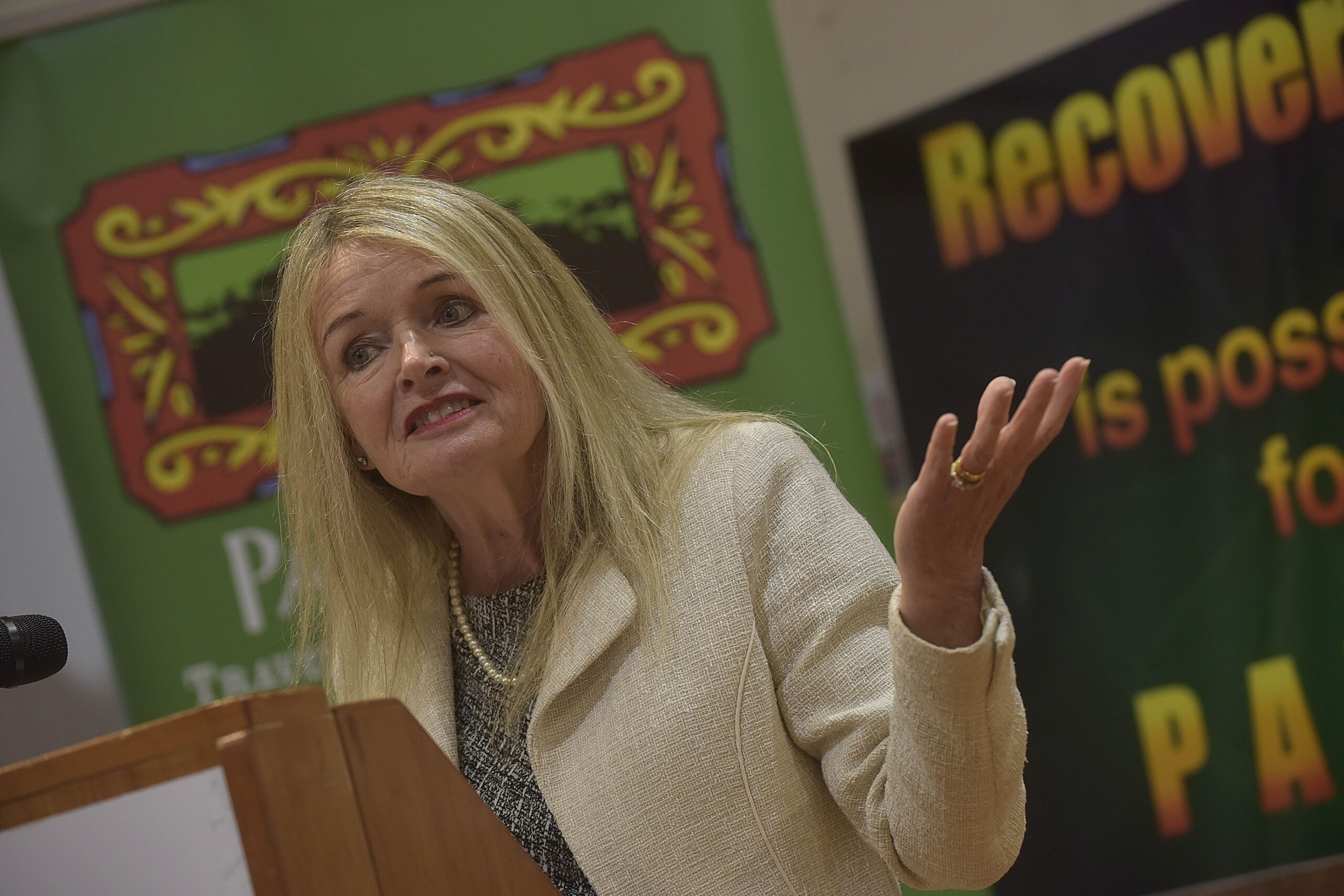
Researcher Professor Catherine Comiskey of Trinity College Dublin School of Nursing and Midwifery provided an overview of the findings and their implications for policy and for service provision.
Recommendations outlined in the report include
- the urgent finalisation and implementation of a new National Drugs Strategy and Action Plan, with specific actions for Travellers and direct representation of Traveller organisations on implementation structures.
- full implementation and resourcing of the National Traveller Health Action Plan
- expansion of targeted programmes in addiction services and Traveller organisations, improved ethnic equality monitoring, and specific measures for Traveller women.
- the need for full and effective implementation of the National Traveller and Roma Inclusion Strategy to address the wider social determinants of health, including racism, accommodation, education, employment, and criminalisation.
- provision of anti‑racism training to all relevant agencies.
Lynsey Kavanagh, Co-Director of Pavee Point, stated that the report makes clear that Traveller substance use cannot be addressed in isolation or through a one-size-fits-all approach. It calls for an integrated health-led, human rights-based approach, using both targeted and mainstream responses, co-developed and delivered in partnership with Travellers and Traveller organisations.
“The research provides a clear evidence-based roadmap for Government, the HSE, Traveller organisations and community organisations. The challenge now is ensuring recommendations are implemented in full,” said John Paul Collins.
“We are probably the greatest country in Europe when it comes to good policy … but the lack of implementation is failing.”
Service provider, p.31
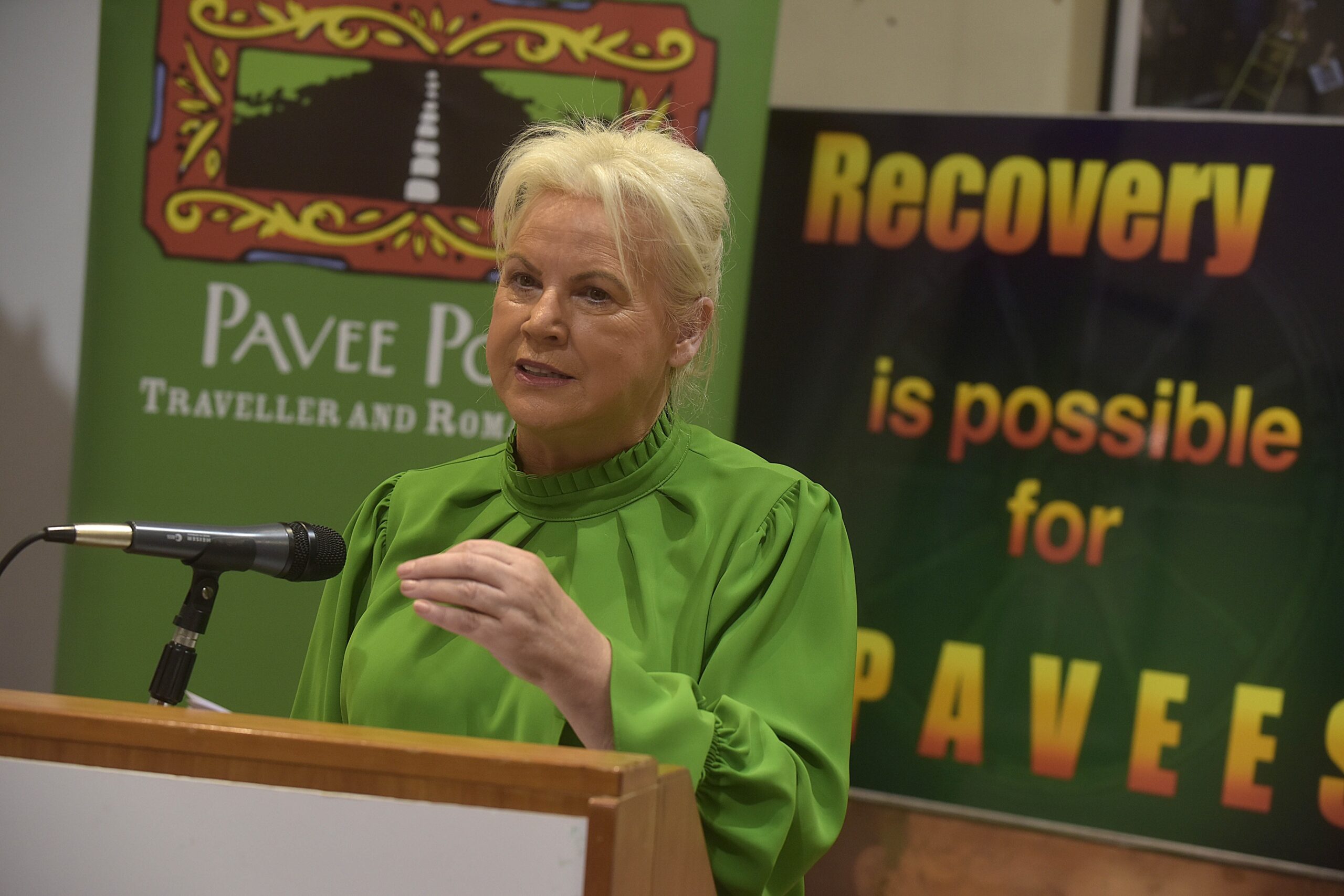
Minister of State for Public Health, Wellbeing and the National Drugs Strategy, Jennifer Murnane O’Connor, formally launched the research:
“We know that there are social factors that centre health inequalities for Travellers, and we all want to tackle this. The report being launched today makes it clear that targeted interventions and targeting the social determinants are so important for reducing harm. It is important that Travellers can access mainstream health service with the support of targeted measures such as the Primary Health Care for Traveller Projects and the Brighter Beginnings initiative”
Fiona Hammond, Head of Service for Primary Care, HSE Dublin South and Wicklow, spoke on the success of the Traveller Primary Health Care Projects and the need to support and expand on the work they do.
Aisling Heffernan, Chair of the National Traveller Health Implementation Group, said the group would work in partnership with Traveller organisations and other stakeholders to ensure delivery.
“This will lead to meaningful, measurable change, advancing equality, dignity and health justice for all Travellers across Ireland,” she said.
The launch of this publication marks an important step in making visible the scale and impact of substance use within Traveller communities, and the urgent need for coordinated national action.
Read the report here: Traveller Substance Use in Ireland: A National Study
